


Licensing in Thailand (Nursery-Kindergarten)
# Opening a Nursery in Thailand (2025–2026)
## New compliance expectations, common mistakes, and a practical checklist
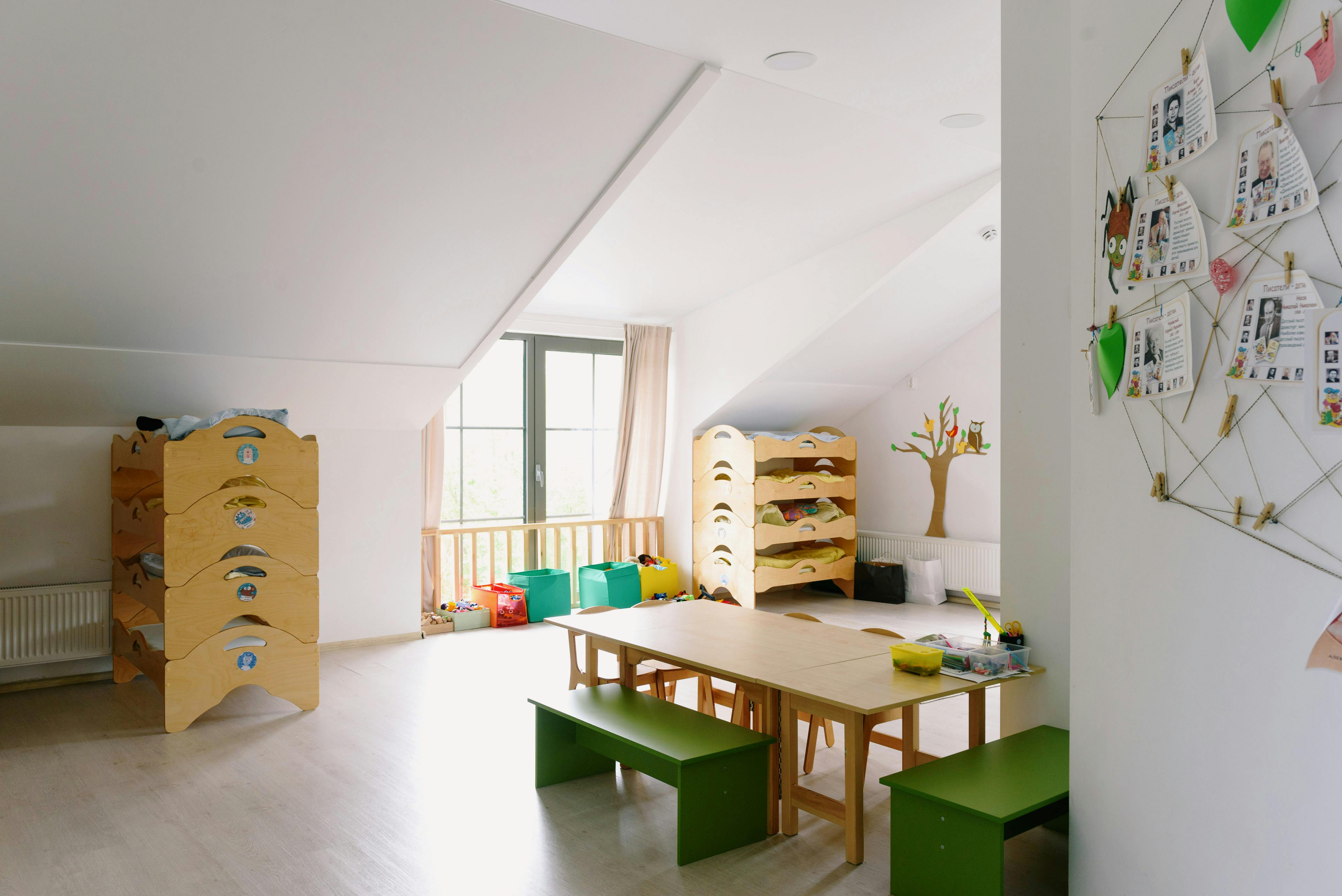
Opening a nursery in Thailand is not only a business decision—it’s a regulated childcare activity. In 2025–2026, the biggest compliance pressure is not “branding” or “curriculum marketing,” but **documentation, premises suitability, inspections, and qualified responsibility**.
This guide is written for founders, operators, and landlords who want to avoid the most common legal and operational risks.
---
## Nursery vs. Kindergarten: the #1 mistake to avoid
In Thailand, the words “nursery,” “daycare,” “preschool,” and “kindergarten” are often used interchangeably—yet they can fall under **different legal frameworks** and **different supervising authorities**.
### If you are operating a **Nursery / Childcare Center**
Your primary compliance focus will be:
- child safety and welfare
- premises suitability and inspection readiness
- documented right to use the premises
- staffing capability and auditable procedures
### If you are operating a **Private Kindergarten / Private School**
You typically face additional governance and education-framework requirements, including:
- licensed Thai roles for school governance (where applicable)
- education plans/curriculum documentation
- formal personnel documentation
---
## What’s getting stricter in real life (2025–2026)
Across Thailand, the “direction of travel” is clear: regulators expect **stronger proof** and **cleaner documentation**—especially around the premises.
### 1) Premises rights: prove you can legally operate there
Authorities increasingly want proof that you have stable, lawful rights to use the building:
- ownership evidence (if you own)
- or lease/contract evidence (if you rent)
- plus the owner’s written permission to use the site as a nursery/childcare facility
If you rent, plan for a **multi-year lease**. Short or informal agreements often fail under scrutiny.
### 2) Municipal/local suitability approval matters
Many locations require local administrative confirmation that the site can be used for childcare/education—especially if:
- the building is not previously used for childcare/education
- renovations or a “change of use” is needed
- safety upgrades are required
### 3) Safety and layout are inspected, not assumed
Expect practical checks such as:
- child-safe layout and controlled access
- safe entry/exit, evacuation readiness
- fire safety expectations (as applicable)
- sanitation and hygiene setup
- fall risk controls (stairs/rails/surfaces)
- adequate usable space
**Key point:** A building can look perfect and still fail if you can’t document it properly.
---
## Staffing and qualifications: the myth to stop repeating
You may hear: “Thailand doesn’t have Early Childhood Education degrees, so you can’t find qualified Thai staff.”
That’s not true. Thailand does have Early Childhood Education programs (การศึกษาปฐมวัย).
### How to recruit Thai staff with Early Childhood qualifications
Use these Thai keywords in job ads and screening:
- การศึกษาปฐมวัย
- ครุศาสตรบัณฑิต (ปฐมวัย)
- ศึกษาศาสตรบัณฑิต (ปฐมวัย)
- ปริญญาตรี ปฐมวัย
Then verify with:
- degree certificate + transcript showing the program name
- any professional registration requirements that apply to the specific role/category
---
## The licensing process: realistic sequence (how it usually works)
While details vary by province and category, most successful applications follow this order:
1. **Confirm the correct category** (nursery vs private school)
2. **Secure premises** and collect owner/lease/permission documents
3. **Prepare policies and operational documents** (safety, hygiene, staffing responsibility, emergency procedures)
4. **Submit the application** to the competent local authority
5. **Document review and corrections** (usually several rounds)
6. **Site inspection**
7. **License issuance** (if compliant)
**Timeline expectation:** commonly **several months**, depending on premises readiness and document quality.
---
## Bangkok “Form 05” / tightening rumours: how to write this safely
Some operators report that Bangkok is rolling out stricter documentation practices (often referred to informally as “Form 05”). The reported focus—owner permission, blue book, municipal acceptance, and qualified leadership—matches the broader nationwide enforcement trend:
> “Operators in Bangkok report stricter documentation and approval practices being applied in some cases. Because procedures and labels can differ by district and over time, founders should verify current filing requirements directly with the responsible local office before signing leases or starting renovations.”
---
# Quick Compliance Checklist (Copy/Paste Box)
✅ **Category**
- Nursery/childcare center (care-focused) or private kindergarten/school (education-focused) clearly defined
✅ **Premises**
- Ownership proof or legally valid lease
- Owner’s written permission for childcare use
- Local/municipal suitability acknowledgement (if required)
- Building layout supports safe access, supervision, hygiene, emergency exit planning
✅ **Safety & Operations**
- Written safety policy + emergency response plan
- Hygiene/sanitation procedures documented
- Child protection and supervision procedures auditable
✅ **Staff**
- Responsible staff identified with verifiable competency
- Early Childhood Education qualified candidates screened (where required)
- HR documentation prepared for inspection
✅ **Application Readiness**
- All documents compiled in one consistent set
- Premises inspection readiness confirmed before submission
---
## Final note
Most licensing failures are not caused by “bad intentions.” They happen because founders:
- choose the wrong legal category,
- sign weak leases without permission documents,
- underestimate municipal approvals,
- or attempt to “fix paperwork later.”
If you treat compliance as part of your business model from day one, licensing becomes a process—not a crisis.
---
[https://phuket.school/content/perma?id=4579](https://phuket.school/content/perma?id=4579)
### SEO Title
1. **Open a Nursery in Thailand (2025–2026): Licensing & Checklist**
2. **Nursery License Thailand 2025–2026: Requirements, Costs, Steps**
3. **How to Open a Daycare/Nursery in Thailand: Legal Requirements**
### Meta description
1. **Learn how to open a nursery in Thailand in 2025–2026: licensing steps, premises documents, municipal approval, staffing, inspections, and a checklist.**
2. **A practical 2025–2026 guide to Thailand nursery licensing: correct category, premises proof, safety inspections, staff qualifications, and compliance tips.**
3. **Planning a daycare in Thailand? Get the 2025–2026 requirements, documents, inspections, staff qualifications, and a copy-paste compliance checklist.**
### English SEO keywords (phrases)
- nursery license Thailand
- open a nursery in Thailand
- childcare center licensing Thailand
- daycare license Thailand
- nursery requirements Thailand 2025
- nursery requirements Thailand 2026
- childcare regulations Thailand
- childcare business Thailand
- start a daycare in Thailand
- nursery premises requirements Thailand
- municipal approval nursery Thailand
- landlord permission for nursery Thailand
- blue book house registration Thailand nursery
- childcare safety standards Thailand
- childcare inspection Thailand
- early childhood education degree Thailand
- hire early childhood teacher Thailand
- Thai director requirement private school Thailand
- private kindergarten Thailand legal requirements
- preschool licensing Thailand
- Bangkok nursery compliance
- BMA nursery requirements
- Phuket nursery licensing
- migrant children school admission Thailand
- G Code student ID Thailand
### English hashtags
\#NurseryThailand #DaycareThailand #ChildcareThailand #OpenANursery #StartADaycare #ThailandBusiness #ThailandLicensing #ChildcareLicense #NurseryLicense #PreschoolThailand #KindergartenThailand #PrivateSchoolThailand #EarlyChildhoodEducation #ECE #BangkokThailand #BMA #PhuketThailand #ThaiLaw #Compliance #SafetyStandards #SchoolAdmissions #MigrantEducation #GCode